
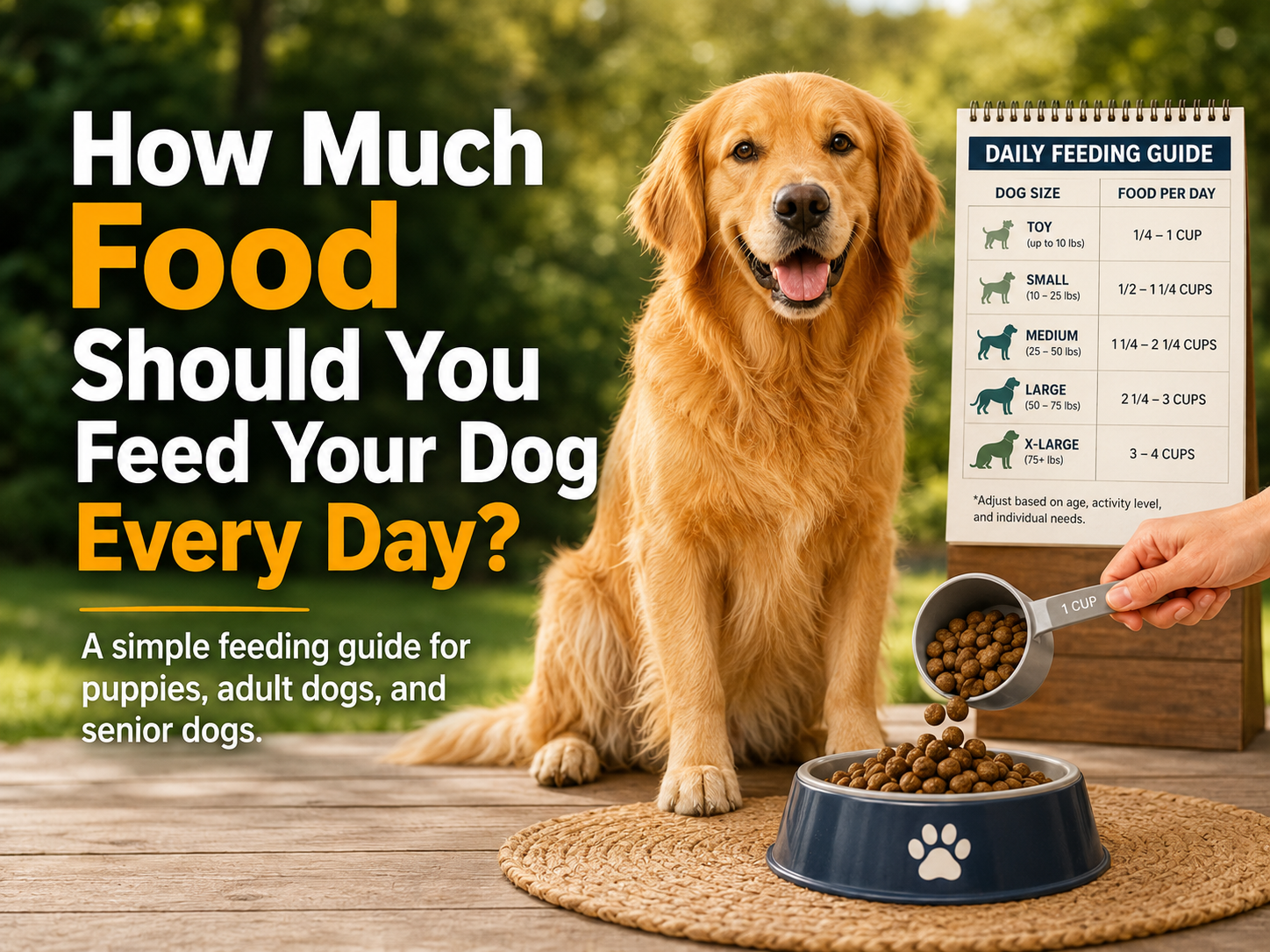
How much food a dog should eat every day depends on its age, body weight, activity level, breed, health, and the type of food being served. Feeding too little may lead to nutritional deficiencies and low energy, while feeding too much can cause unhealthy weight gain and related health problems.
Dog-food packaging provides a useful starting point, but the recommended quantity may need to be adjusted according to your dog’s individual condition. This guide will help you understand how much food to give your dog and how to create a healthy daily feeding routine.
Understand Why the Correct Food Quantity Matters
Giving your dog the correct amount of food is essential for maintaining a healthy weight, supporting growth, and providing enough energy for daily activities.
A balanced feeding routine can help:
Maintain a healthy body weight
Support strong bones and muscles
Provide energy for exercise and play
Support healthy digestion
Maintain a healthy skin and coat
Reduce the risk of obesity
Support your dog’s overall health
Every dog has different nutritional needs. The amount that works for one dog may not be suitable for another dog of the same size.
Consider Your Dog’s Age
A dog’s food requirement changes throughout its life. Puppies generally need more calories in relation to their body weight because they are growing. Adult dogs need enough food to maintain their weight and energy, while senior dogs may need fewer calories if they become less active.
Dogs can generally be divided into:
Puppies
Adult dogs
Senior dogs
Pregnant or nursing dogs
Each life stage requires a suitable food formula and feeding schedule.
How Much Food Should You Feed a Puppy?
Puppies need nutritious food to support the development of their bones, muscles, organs, and immune system. They usually need to eat more frequently than adult dogs because their stomachs are smaller.
A general puppy feeding schedule can be:
Six to twelve weeks: Four meals per day
Three to six months: Three meals per day
Six to twelve months: Two meals per day
After twelve months: Usually two meals per day
Large breeds may remain on puppy food longer than smaller breeds. Always choose puppy food that is suitable for your dog’s expected adult size.
How Much Food Should You Feed an Adult Dog?
Most healthy adult dogs can be fed twice daily. The exact quantity should be based on the feeding instructions provided on the dog-food package and adjusted according to the dog’s activity level and body condition.
A general dry-food starting guide may look like this:
Up to 5 kg: Approximately 75–120 grams per day
5–10 kg: Approximately 120–190 grams per day
10–20 kg: Approximately 190–320 grams per day
20–30 kg: Approximately 320–430 grams per day
30–40 kg: Approximately 430–520 grams per day
Above 40 kg: Follow the product’s weight-based feeding chart
These quantities are only broad examples. Dog foods have different calorie densities, so the correct serving can vary significantly between brands and formulas.
How Much Food Should You Feed a Senior Dog?
Senior dogs may become less active and require fewer calories than younger adult dogs. However, they still need high-quality protein and balanced nutrition to help maintain muscle and general health.
When feeding a senior dog:
Monitor its weight regularly
Choose food designed for its life stage
Avoid giving too many treats
Divide the daily quantity into two meals
Adjust portions if activity levels decrease
Speak with a veterinarian about health-related dietary needs
Do not reduce your senior dog’s food suddenly. Make gradual changes and monitor its weight and energy.
Check the Feeding Guide on the Dog-Food Package
Every commercial dog food has a different nutritional composition. One cup of one food may contain significantly more calories than one cup of another food.
Check the package for:
Recommended daily quantity
Dog weight range
Age or life-stage suitability
Calories per serving
Serving measurement
Storage instructions
Use the package recommendation as a starting point rather than a fixed rule. Your dog may need slightly more or less depending on its lifestyle and body condition.
Measure Food Accurately
Estimating food by looking at it can easily lead to overfeeding. Use a proper kitchen scale or measuring cup to keep portions consistent.
A kitchen scale is usually more accurate because:
Cup sizes may vary
Kibble sizes may be different
Food density changes between products
Small measuring errors can accumulate over time
Measure your dog’s complete daily quantity and divide it between the scheduled meals.
Consider Your Dog’s Body Weight
Body weight is one of the main factors used to estimate how much food a dog needs. However, food should ideally be calculated using the dog’s healthy target weight rather than an unhealthy current weight.
For example:
An underweight dog may require a controlled increase
An overweight dog may require a calorie-reduction plan
A healthy dog may only need maintenance portions
A growing puppy may need regular portion adjustments
Weigh your dog regularly, especially after changing its diet or serving quantity.
Consider Your Dog’s Activity Level
Dogs that exercise frequently usually need more energy than dogs with a less active lifestyle.
Dogs that may need more food include:
Working dogs
Highly active breeds
Dogs involved in agility training
Dogs that walk or run for long periods
Dogs living in colder environments
Pregnant or nursing dogs
Dogs that may need fewer calories include:
Indoor dogs with limited exercise
Older dogs
Dogs recovering from an injury
Dogs prone to weight gain
Neutered dogs with reduced energy requirements
The amount should be adjusted gradually rather than changed suddenly.
Consider Your Dog’s Breed and Size
Small, medium, and large dogs have different nutritional needs. Small dogs may need more calories per kilogram of body weight, while large dogs need carefully balanced nutrition to support their joints and growth.
Common size groups include:
Toy breeds
Small breeds
Medium breeds
Large breeds
Giant breeds
Choose food designed for your dog’s breed size whenever possible. Kibble size and calorie density are often adjusted for different dogs.
Understand Your Dog’s Body Condition
A body-condition check can help determine whether your dog is receiving the correct amount of food. Body condition considers the dog’s shape and body fat rather than relying only on weight.
A dog may be at a healthy condition when:
The ribs can be felt without pressing too hard
The ribs are not clearly visible
A waist can be seen from above
The abdomen rises slightly behind the ribs
The dog moves comfortably
The weight remains stable
Veterinary nutrition guidelines recommend considering body condition and muscle condition alongside weight when evaluating a dog’s nutritional needs.
Divide the Daily Food into Regular Meals
Instead of giving the entire daily quantity in one meal, divide it into smaller scheduled meals.
For most adult dogs, a suitable routine is:
One meal in the morning
One meal in the evening
Regular mealtimes can help with:
Portion control
Digestion
Toilet scheduling
Appetite monitoring
Daily routine
Reducing excessive hunger
Avoid leaving unlimited food available throughout the day unless this approach has been recommended for your dog.
Dry Food, Wet Food, or Mixed Feeding
Dogs can be fed dry food, wet food, or a combination of both. The correct quantity depends on the calorie content of each product.
Dry food is:
Easy to measure
Simple to store
Usually more economical
Convenient for everyday feeding
Wet food is:
Higher in moisture
Soft and easy to eat
Often appealing to selective eaters
Available in cans, trays, and pouches
When combining wet and dry food, do not give the full recommended serving of both products. Reduce each portion so the combined calories remain appropriate.
Do Not Forget Treats and Snacks
Treats, chews, biscuits, and table foods all contribute to your dog’s daily calorie intake. Giving the correct food portion will not prevent weight gain if the dog receives too many treats.
Treats should generally make up only a small part of a dog’s daily calorie intake. Most nutrition should come from complete and balanced dog food.
Treats can include:
Training treats
Dog biscuits
Dental chews
Meat treats
Safe fruits and vegetables
Food used to fill interactive toys
Use small pieces during training and include them when calculating the dog’s daily intake.
Avoid Feeding Too Much Human Food
Regularly sharing food from your plate can add unnecessary calories and may encourage begging. Some human foods are also unsafe for dogs.
Foods that should not be given to dogs include:
Chocolate
Grapes and raisins
Onions and garlic
Products containing xylitol
Alcohol
Cooked bones
Foods with excessive salt
Very fatty or spicy meals
When offering safe human foods, keep the portion small and do not use them as a replacement for balanced dog food.
Watch for Signs of Overfeeding
Overfeeding can happen gradually and may not be immediately noticeable.
Possible signs include:
Steady weight gain
Difficulty feeling the ribs
Loss of a visible waist
Reduced interest in exercise
Heavy breathing after mild activity
Frequent soft stools
Leaving food unfinished
Becoming less active
If your dog is gaining weight, reduce treats first and review its meal quantity with a veterinarian.
Watch for Signs of Underfeeding
A dog that does not receive enough food or suitable nutrition may lose weight and energy.
Possible signs include:
Visible ribs, spine, or hip bones
Unexpected weight loss
Low energy
Constant hunger
Poor coat condition
Loss of muscle
Weakness
Reduced activity
Unexpected weight loss can also be caused by an underlying health condition. A veterinarian should examine your dog if the weight loss continues.
Adjust Food Portions Gradually
Do not make a large increase or decrease in your dog’s food quantity overnight. Sudden changes can disturb digestion and make it difficult to understand how the new portion affects the dog.
A better approach is to:
Make a small adjustment
Continue it for one or two weeks
Monitor weight and body condition
Observe appetite and stool quality
Make another adjustment if necessary
Consistent monitoring is more effective than frequently changing the serving amount.
Change Dog Food Slowly
When switching to a different food, introduce it gradually over approximately seven days.
A simple transition schedule can be:
Days one and two: 75% old food and 25% new food
Days three and four: 50% old food and 50% new food
Days five and six: 25% old food and 75% new food
Day seven onward: 100% new food
A gradual change can help reduce digestive problems such as loose stools, vomiting, or loss of appetite.
Provide Fresh Water Every Day
Your dog should always have access to fresh and clean drinking water. Water is essential for digestion, temperature regulation, circulation, and general health.
Remember to:
Wash the water bowl regularly
Replace the water at least daily
Provide extra water during hot weather
Carry water during long walks
Monitor sudden increases or decreases in drinking
Contact a veterinarian if your dog suddenly begins drinking much more or much less than usual.
Monitor Your Dog’s Weight Regularly
Regular weight checks make it easier to identify whether the feeding quantity is suitable.
You can:
Weigh small dogs using a home scale
Weigh yourself while holding the dog
Use a veterinary or pet-store scale
Keep a monthly weight record
Take photographs from above and the side
Check the ribs and waist regularly
If your dog’s weight changes unexpectedly, review its food, treats, exercise, and health.
Use Calorie Requirements as a Guide
Veterinary professionals may calculate a dog’s Resting Energy Requirement and then adjust it according to age, activity level, reproductive status, and body condition.
For example, healthy adult dogs generally require a multiple of their resting energy requirement, while growing puppies require more energy in relation to their size. These formulas are useful starting points, but individual requirements can vary.
Pet owners do not always need to calculate calories manually. The package feeding chart and regular body-condition monitoring are usually simpler for everyday feeding.
When Should You Ask a Veterinarian?
Professional guidance is especially important when a dog:
Is significantly overweight or underweight
Is losing or gaining weight unexpectedly
Has food allergies
Has a medical condition
Is pregnant or nursing
Is recovering from surgery
Has frequent vomiting or diarrhoea
Refuses food regularly
Is a very young puppy
Needs a homemade diet
Dogs with medical conditions may require specially formulated food and carefully controlled portions.
Final Thoughts
The correct amount of food for a dog depends on its weight, age, activity level, breed, body condition, health, and the calorie content of its food. Start with the feeding instructions on the package, measure every serving, divide the daily amount into regular meals, and monitor your dog’s weight over time.
Avoid relying only on a general cup or gram measurement because every dog and every food formula is different. By controlling portions, limiting treats, providing fresh water, and adjusting the diet gradually, you can help your dog maintain a healthy weight and active lifestyle.
The feeding quantities in this guide are general examples and should not replace personalised veterinary advice.

 No products in the cart.