
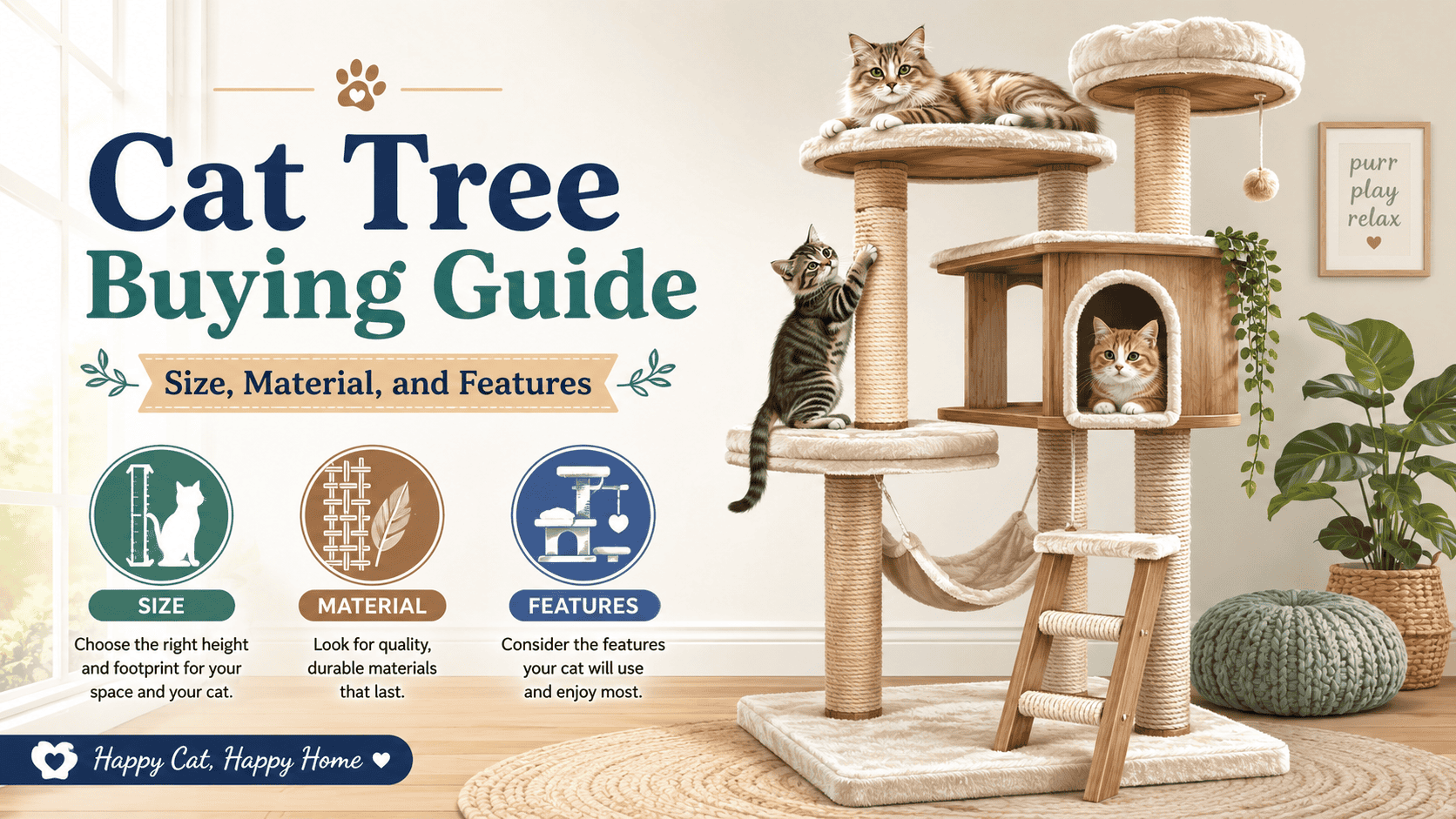
A cat tree is a useful product for keeping your cat active, comfortable, and entertained at home. It gives cats a place to climb, scratch, rest, and play while also protecting your furniture from scratches.
This guide will help you choose the right cat tree based on your cat’s size, activity level, space, and comfort needs.
Understand Why a Cat Tree Is Useful
Cats naturally love climbing, scratching, and sitting in high places. A cat tree gives them a safe space to do these activities indoors.
It also helps:
Encourage exercise
Reduce boredom
Support natural scratching habits
Give cats a private resting area
Protect sofas, beds, and curtains from scratches
This makes a cat tree a great choice for both kittens and adult cats.
Choose the Right Size
The size of the cat tree should match your cat’s body size and activity level.
Small cats or kittens can use compact cat trees.
Large cats need wider platforms and stronger support.
Multiple cats need a bigger cat tree with more levels.
Before buying, check the height, base size, and weight capacity of the cat tree.
A taller cat tree is good for active cats, while a smaller one is better for limited spaces.
Check the Available Space at Home
Before choosing a cat tree, decide where you want to place it.
Good places include:
Living room corners
Near windows
Bedroom corners
Balcony-safe indoor areas
Make sure the cat tree fits properly without blocking movement in the room.
If your room is small, choose a compact vertical cat tree. If you have more space, you can choose a wider multi-level design.
Select the Right Material
Cat trees are made with different materials, and each material affects comfort, durability, and safety.
Wood or engineered wood gives strong support.
Plush fabric provides softness and comfort.
Sisal rope is best for scratching posts.
Carpet covering gives grip and warmth.
Choose a cat tree that feels strong, stable, and comfortable for your cat.
Look for Strong Scratching Posts
Scratching is a natural habit for cats. A good cat tree should include strong scratching posts.
Sisal rope scratching posts are usually the best option because they are durable and safe for regular scratching.
Scratching posts help:
Keep claws healthy
Reduce furniture damage
Give cats a stress-relieving activity
Encourage natural behaviour
Choose a cat tree with multiple scratching areas if your cat scratches often.
Check Stability and Build Quality
A cat tree should be stable and safe. Cats jump, climb, and play with energy, so the structure must not shake easily.
Look for:
Wide base
Strong poles
Balanced design
Good-quality screws and joints
Anti-tip support if available
A weak or unstable cat tree may scare your cat or cause accidents.
For large cats, always choose a heavy-duty cat tree with a strong base.
Choose Comfortable Resting Areas
Cats spend a lot of time sleeping and relaxing. A good cat tree should include comfortable resting spots.
Look for features like:
Soft platforms
Covered condos
Hammocks
Raised beds
Cushioned perches
If your cat likes privacy, choose a cat tree with a covered house or condo.
If your cat likes watching outside, choose a cat tree with a high perch near a window.
Consider Play Features
Many cat trees include toys and activity features to keep cats entertained.
Common features include:
Hanging balls
Ropes
Tunnels
Ladders
Multiple climbing levels
These features help reduce boredom, especially for indoor cats.
For playful kittens, choose a cat tree with more toys and climbing areas. For older cats, choose one with easy steps and comfortable resting platforms.
Think About Your Cat’s Age
Your cat’s age matters when choosing a cat tree.
Kittens need a fun and safe cat tree with low platforms.
Adult cats can use taller and more active designs.
Older cats need easy-to-climb steps and soft resting areas.
Avoid very tall or difficult designs for senior cats because they may find it hard to climb.
Choose an Easy-to-Clean Design
Cat trees can collect fur, dust, and dirt over time.
Choose a cat tree that is easy to clean and maintain.
Look for:
Removable cushions
Washable fabric parts
Smooth surfaces
Easy vacuum cleaning
Good-quality fabric that does not trap too much hair
Regular cleaning keeps the cat tree fresh and hygienic for your pet.
Match the Cat Tree with Your Home Style
Cat trees come in many designs, colours, and sizes. Choose one that matches your home decor and available space.
Neutral colours like beige, grey, brown, and cream usually blend well with most rooms.
A good-looking cat tree can be both useful for your cat and suitable for your home interior.
Make Your Cat Feel Comfortable
After buying a cat tree, give your cat time to adjust.
You can place treats, toys, or a familiar blanket on the cat tree to encourage your cat to use it.
Place it near a window or favourite resting area so your cat feels interested.
Some cats use a cat tree immediately, while others need a few days.
Final Thoughts
Choosing the right cat tree depends on size, material, stability, scratching posts, comfort, and your cat’s activity level. A well-chosen cat tree gives your cat a safe place to climb, scratch, play, and rest.
By selecting the right cat tree, you can keep your cat active, happy, and comfortable while also protecting your furniture from daily scratches.



 No products in the cart.