
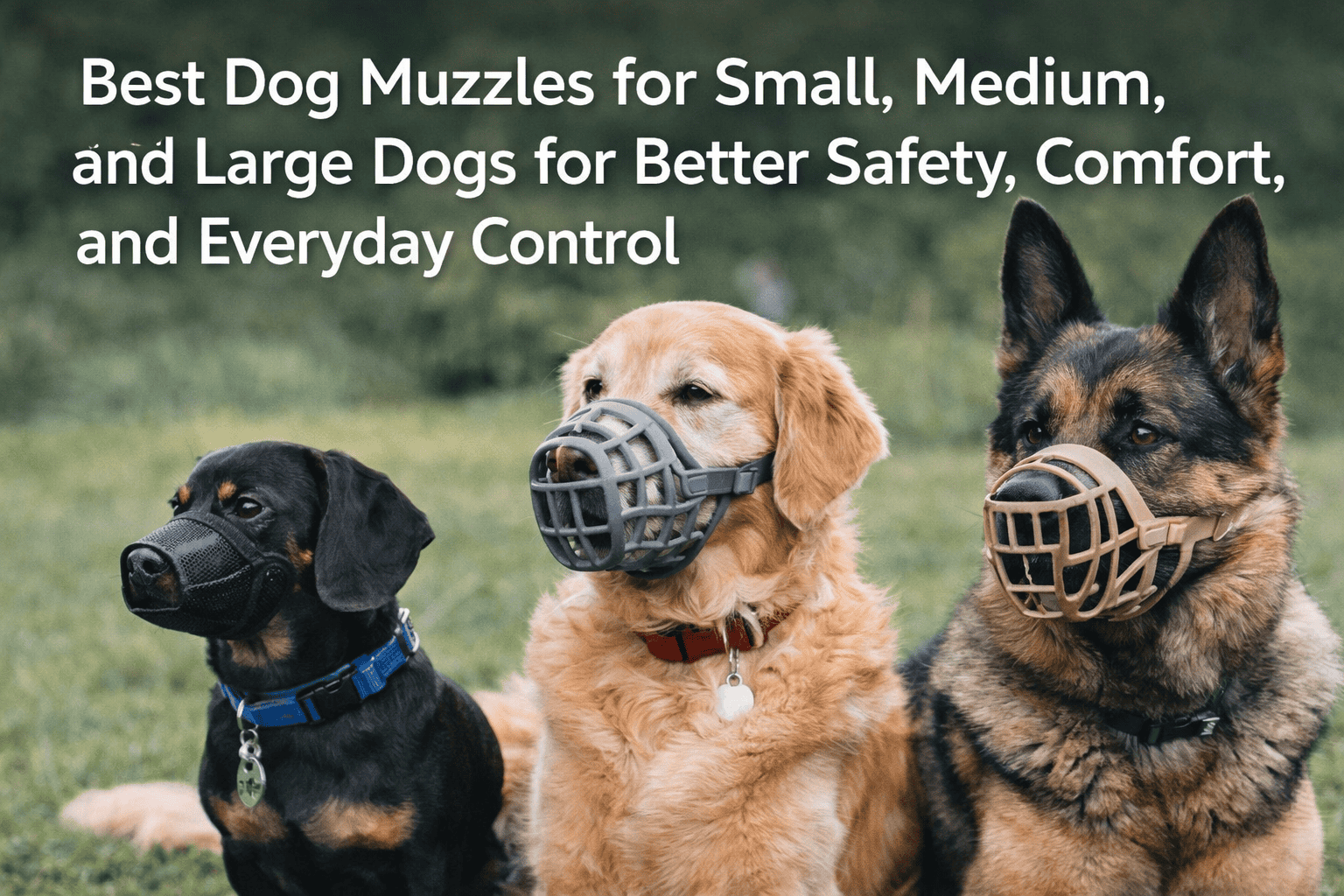
Choosing the right dog muzzle is not only about safety. A good muzzle can help with training, prevent unwanted biting or chewing, make vet visits easier, and give you better control in stressful situations. But with so many options available, finding the best muzzle for your dog can feel confusing.
Here is a simple guide to help you choose the best dog muzzle for small, medium, and large dogs.
Understand Why Your Dog Needs a Muzzle
The first step is to understand the purpose of the muzzle. Not every dog needs one for the same reason.
Some dogs need a muzzle for short-term situations like grooming, vet appointments, or travel.
Some dogs need a muzzle during training to help manage reactive behavior in public places.
Other dogs may need one to stop scavenging, chewing, or picking up unsafe things from the ground during walks.
Knowing the reason will help you choose the right type, fit, and material.
Always Choose the Right Size for Your Dog
A muzzle should never be too tight or too loose. The correct size is very important for both safety and comfort.
Small dogs need lightweight muzzles that fit their shorter and narrower snouts without pressing too hard on the face.
Medium dogs need a secure fit that stays in place during walks, training, and daily use.
Large dogs need strong and durable muzzles with enough room to pant, especially if they are active or strong pullers.
A properly fitted muzzle should allow your dog to pant, breathe, and stay comfortable while still preventing unwanted biting or chewing.
Choose a Muzzle Style Based on Your Dog’s Needs
Different muzzle styles work better for different situations. Picking the right design can make a big difference.
Some common types include:
Basket Muzzle
Best for longer wear, training, walking, and general safety. It allows better airflow and gives the dog room to pant.
Soft Muzzle
Good for short-term use such as grooming or quick vet visits. It is usually less suitable for long periods because it can limit panting.
Silicone Muzzle
A flexible and often lightweight option that can work well for comfort and casual use.
Nylon Muzzle
Often used for temporary control, but it should be used carefully and only for short periods.
Look for Comfort and Breathability
Comfort matters just as much as control. A dog is more likely to accept a muzzle if it feels secure without being painful or restrictive.
Look for features such as:
- Soft padding around the nose
- Adjustable straps for a better fit
- Lightweight material
- Enough front space for panting
- Smooth edges that do not rub the skin
A breathable muzzle is especially important in warm weather or during walks.
Pick a Muzzle Based on Dog Size
The best muzzle also depends on whether your dog is small, medium, or large.
Best Muzzles for Small Dogs
Small breeds usually do better with lightweight basket muzzles or soft muzzles made for short snouts. The muzzle should not feel bulky or heavy on the face.
Best Muzzles for Medium Dogs
Medium dogs often need a balance of comfort, control, and durability. Basket muzzles are usually a strong option for everyday walks and training sessions.
Best Muzzles for Large Dogs
Large dogs often need sturdy basket muzzles with strong straps and secure buckles. They also need enough space to pant and stay calm during use.
Make Sure Your Dog Can Pant and Drink
One of the most important things to check is whether your dog can pant properly while wearing the muzzle. Dogs cool themselves by panting, so this should never be restricted during regular use.
Many basket muzzles also allow dogs to drink water, which makes them a better choice for longer walks or outdoor use.
If a muzzle prevents panting or drinking completely, it should only be used for very short periods and under close supervision.
Avoid Using a Muzzle the Wrong Way
A muzzle is a helpful tool, but it should not be used as a punishment.
Do not use a muzzle to force your dog to stay quiet for long periods.
Do not leave a muzzled dog alone without supervision.
Do not use a tight soft muzzle for exercise, hot weather, or long outdoor walks.
The goal is to improve safety and control while keeping your dog comfortable and calm.
Train Your Dog to Accept the Muzzle Slowly
Even the best muzzle will not work well if your dog is afraid of it. Introduce it slowly and positively.
Let your dog sniff the muzzle first.
Reward them with treats when they show calm behavior near it.
Practice wearing it for a few seconds, then slowly increase the time.
Use praise and rewards so your dog starts to connect the muzzle with a positive experience.
This helps reduce stress and makes everyday use much easier.
Consider Your Dog’s Breed and Snout Shape
Not every muzzle fits every breed. Dogs with long snouts, short snouts, flat faces, or extra-wide noses may need special designs.
For example, a muzzle that works well for a Labrador may not fit a Pug or Bulldog properly.
Always check the muzzle shape, sizing guide, and fit recommendations before buying.
Final Thoughts
Choosing the best dog muzzle for small, medium, and large dogs does not have to be difficult. Start by understanding why your dog needs a muzzle, then focus on size, comfort, breathability, and the right style.
A good muzzle should help improve safety, support training, and give you better everyday control without making your dog uncomfortable. When chosen carefully and introduced properly, a muzzle can become a safe and useful part of your dog’s routine.
 No products in the cart.